Industry experience across systems, web, process, and automation delivery.
// OPERATING MANUAL · HOW WE WORK
Map the work
before the build
Discovery is field mapping — ownership, statuses, exceptions, and where data should live. The map becomes the contract for what software must respect.
Eight sections — read as an operating manual, not a sales deck.
// EXPERIENCE SIGNAL
10+ years around systems, processes, and the problems that appear during build.
Aitroniclab is built from practical delivery experience: mapping how companies sell, quote, approve, deliver, report, and keep data moving between tools. The value is not only writing code; it is recognizing where projects usually break before they become expensive.
Delivered and reviewed enough builds to see recurring failure points early.
Work starts from how sales, operations, finance, and delivery fit together.
Client experience across Baltic and European business environments.
// CLIENT COUNTRIES / EUROPE
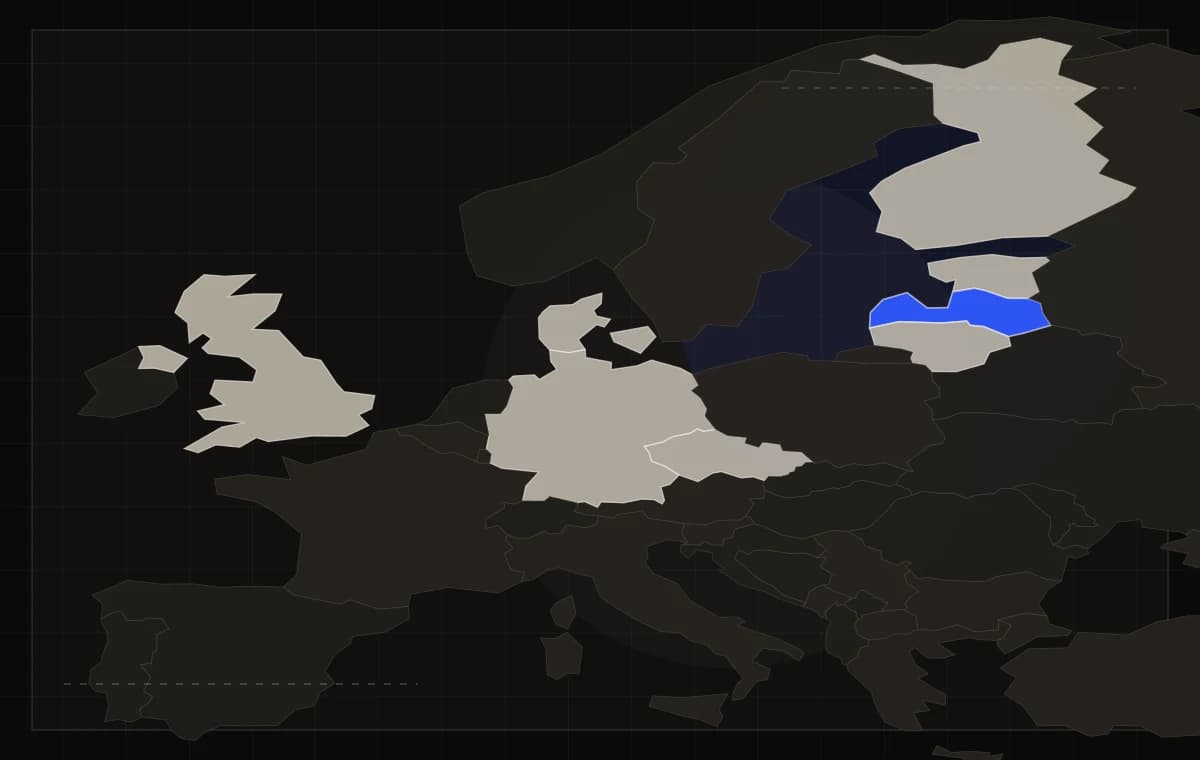
UKDenmarkGermanyCzechiaFinlandEstoniaLatviaLithuania
Map base: Natural Earth public domain
Why normal websites fail this class of problem
A marketing site can describe the offer — it cannot route work, enforce ownership, or reconcile systems. When intake, quote logic, and operations live in different heads and tools, a new front-end without a workflow map produces polished confusion: the interface changes while the company’s route through itself does not.
// CHECKLIST
- Intake and operations disagree on what “open” means.
- Pricing or configuration still lives in spreadsheets or one expert.
- Integrations are treated as plumbing after UX instead of behaviour design.
CONTROL: name where truth breaks before choosing surfaces.
Mapping before building
Discovery is not a deck exercise — it is field mapping: who owns each hop, valid statuses, exceptions, and where data is supposed to live. The map becomes the contract for what software must respect. Skipping it misaligns incentives on fixed quotes for multi-system work.
// CHECKLIST
- Observe handoffs and failure modes without polishing for slides.
- Agree ownership at each transition — not “the team” in the abstract.
- Document sync and reconciliation expectations where systems touch.
RISK: unmapped approvals and exceptions become scope change tax later.
System design
Boundaries between layers — CRM, ERP, portals, automation, bounded AI — are drawn with explicit failure visibility. Integration rules, retries, and operator views are part of design, not ticket #402 after launch.
// CHECKLIST
- Slice responsibilities: what each layer must never pretend to own.
- Define what “synced” means per entity — timestamps are not semantics.
- Plan alerts when automation disagrees with reality — because it will.
Prototype, calculator, and workflow logic
High-risk logic — quoting, configuration, routing — is proven thinly before full build: structured prototypes, calculator slices, or workflow branches teams can actually run. The goal is falsifiable behaviour, not a clickable facade.
CONTROL: prove the worst branch early — not only the happy path demo.
Where projects usually break
Unmapped approvals, implicit quote logic, integration treated as plumbing, AI without review states — each becomes scope-change tax or trust debt.
Implementation
Delivery is vertical slices that teams can operate — not big-bang launches that stall on invisible dependencies. Each slice ties UI (where needed) to workflow state, permissions, and logging your people will actually use.
// CHECKLIST
- Ship a thin end-to-end thread before broadening SKUs or regions.
- Instrument key transitions for support and tuning after go-live.
Integration
Connections are owned behaviours: retries, conflict handling, reconciliation views, and clear operator escalation. Treat integrations as part of the product surface — not a one-off technical subtask.
// CHECKLIST
- Name the system of record per entity when pipelines disagree.
- Expose sync health where ops lives — not only in developer logs.
RISK: shadow spreadsheets return when breaks are invisible.
Launch review
Before scale — traffic, access patterns, dependencies, deployment fragility — a structured review sequences fixes by severity and business impact. Optional hardening pass when risk profile or compliance demands evidence, not theatre.
Iteration
Systems drift as rules and volumes change. Retainers or periodic reviews keep rules, integrations, and automation aligned with how the company actually runs — measurement beats anecdote for what to tune next.
CONTROL: budget for change — static “launch and walk away” rarely holds.